


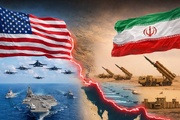
Repeated US threats against Iran have become one of the most consistent components of Washington’s political rhetoric, a rhetoric that is sometimes accompanied by widespread sanctions and sometimes by a display of military power in the region. But what is less taken into consideration is the strategic consequences of such an approach.
By continuing these threats, the US government is practically entering a difficult, multi-layered, and complex game; a game whose rules cannot be determined solely by technological superiority or classical military power.
Four decades of confrontation between Tehran and Washington have turned Iran into a country that has built its defense and security structure not on the basis of classical warfare, but on the basis of asymmetric deterrence. This model is the product of dense historical experiences, long-term sanctions, and constant exposure to the external pressure. In such a framework, Iran has tried to raise the cost of any direct conflict to the other side to a level where the decision to attack becomes a risky and costly choice.
During the recent 12-day war, Iran demonstrated that it is not a passive actor or one limited to symbolic responses. Tehran’s rapid, coordinated, and multi-layered responses conveyed the message that its operational capabilities were not only maintained but also, in some areas, enhanced. What makes this experience significant is not simply the number of operations or the range of its weapons; it is the demonstration of its ability to make rapid decisions, manage the battlefield, and penetrate enemy defenses. This experience demonstrated that Iran thinks and acts within a framework that goes beyond the traditional models.
The United States is considered a major military power in the world, but the problem is that a potential conflict with Iran will not be a classic, limited war. The geography of the region, the security complexities of West Asia, the presence of numerous US bases around Iran, and Tehran’s extensive network of regional allies all complicate the equation. In such an atmosphere, any military action could set off a chain of counter-reactions that would be difficult to contain.
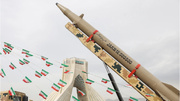
One of the most important features of Iran’s defense strategy is its reliance on asymmetric deterrence, a strategy that seeks to create a greater threat at a lower cost. This concept is not limited to military means alone, but encompasses a combination of missile power, naval capabilities, electronic warfare, drones, and a network of regional linkages. The message of this strategy is clear: any attack will not go unanswered, and the response will not necessarily be limited to the same level and geography.
Washington's repeated threats are, in fact, a test of will, but one whose results cannot be predicted in advance. Past experiences have shown that Iran has moved to increase its deterrent capabilities rather than retreating hastily in the face of external pressure. From a strategic point of view, as threats increase, the incentive to develop defensive tools also increases. This cycle can lead to an unwanted competition from which it is difficult to escape.
Another important point is the issue of “ending the war.” The history of military conflicts shows that starting a war does not necessarily mean complete control over its course and outcome. Several major powers in recent decades have entered wars that they thought would be short and decisive, but in practice have faced long-term erosion. In a possible conflict scenario with Iran, there is a risk that Washington could initiate it but not determine the timing and conditions of the end.
Iran has been preparing for various scenarios for more than four decades. The country's defense structure is built on the principle of sustainability in crisis situations; that is, maintaining the capacity to respond even in the event of an initial strike. Such a structure usually involves the dispersion of facilities, layering of defenses, and reliance on initiative in various scenes. This approach increases the likelihood of surprise for the other side; because not all capacities are visible and some capabilities remain hidden until the moment of use.
On the other hand, regional atmosphere is also extremely sensitive and fragile. Any large-scale conflict could affect energy security, shipping routes, and global economic stability. In such a situation, US’s allies may also be less willing to engage in a costly and uncertain war. This further limits Washington’s decision-making process.
MNA
 05:57 - 2026/02/20













Your Comment